AwesomeBrick Masonry Contractors
Expert Masonry Craftsmanship You Can Trust
Providing durable, beautiful masonry crafted with skill and care.
Contact Us And Get a Free Quote
Call To Ask Any Questions

(331) 236-5028

ABOUT US

AwesomeBrick Masonry Contractors

We are a seasoned masonry team dedicated to providing top-tier craftsmanship and exceptional service for residential and commercial projects alike. With years of hands-on experience, our skilled masons combine traditional techniques with modern technology to deliver results that stand the test of time. Our commitment to quality starts with sourcing premium materials and extends through meticulous attention to detail on every job site. Whether rebuilding historic structures or crafting new walls, patios, chimneys, or stonework, we prioritize durability, aesthetic appeal, and customer satisfaction. We believe masonry is both an art and a science, and our passionate team continuously hones their craft to meet evolving industry standards. From project planning and design consultation to flawless execution and cleanup, we handle every step with professionalism and transparency. Our goal is to build lasting relationships with clients by exceeding expectations through expert masonry solutions tailored specifically for your property’s unique needs.
Call To Ask Any Questions

(331) 236-5028

Skilled Solutions Crafted with Precision and Care

Comprehensive Masonry Services for Every Project
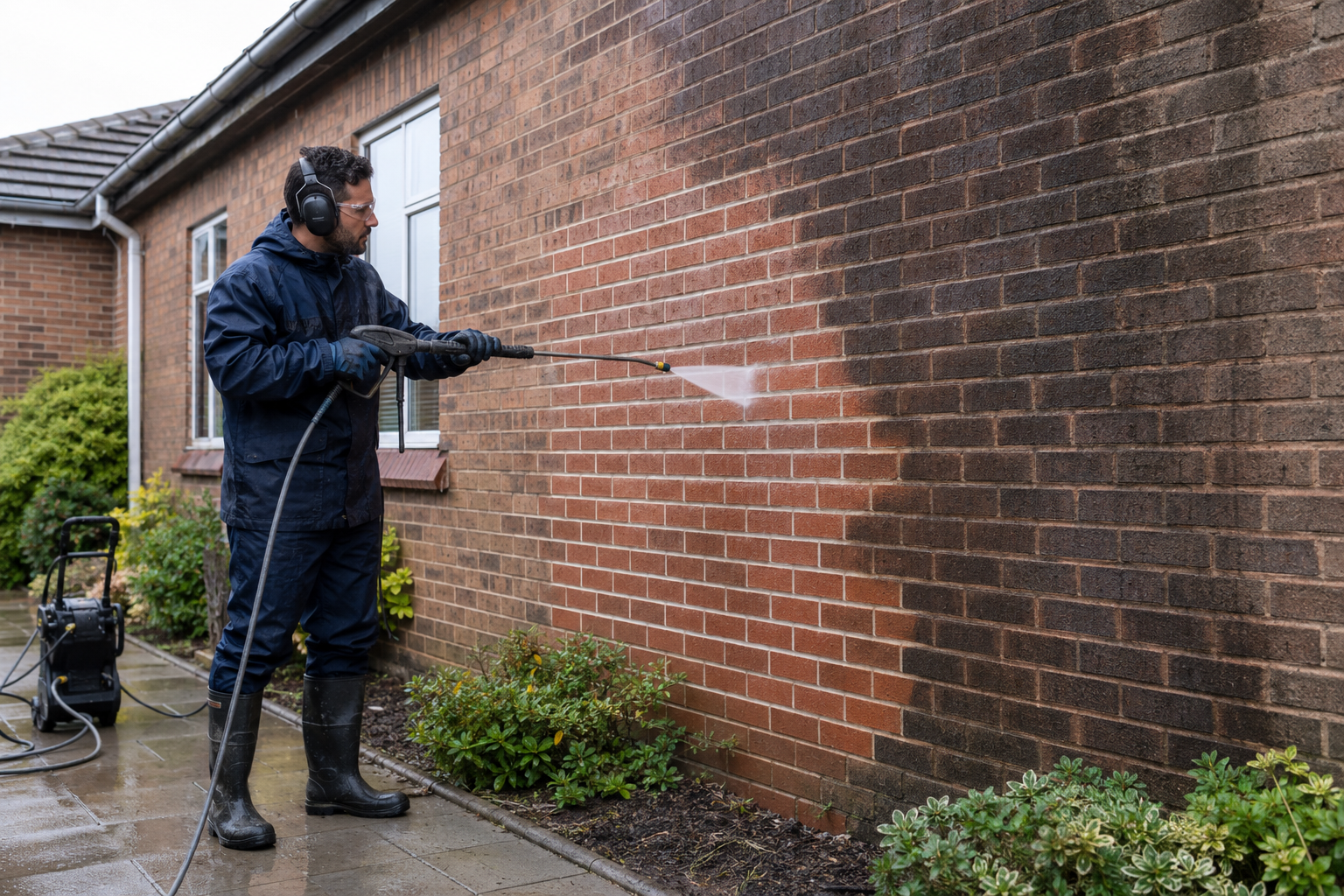
Pressure Washing

01.
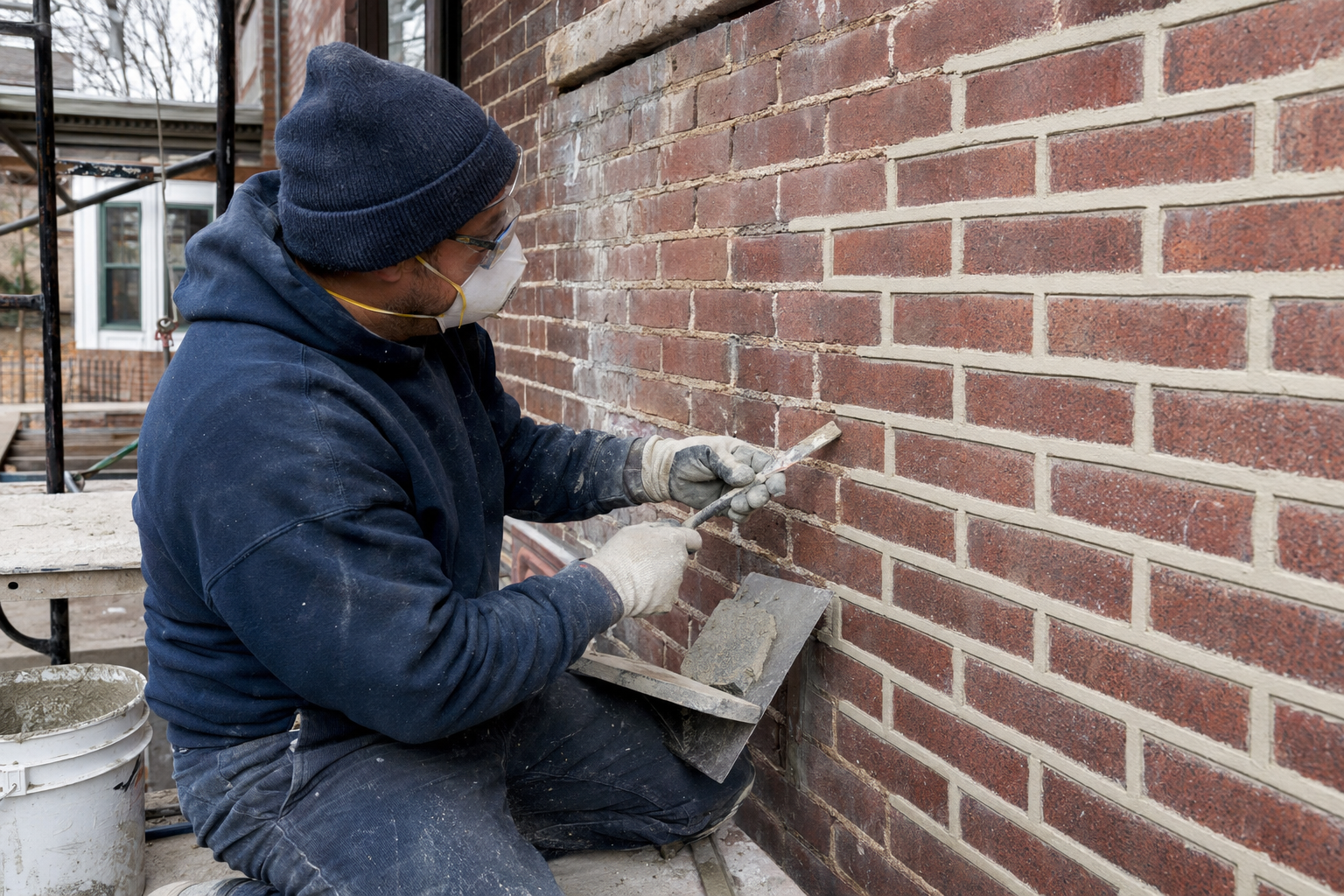
Tuckpointing

02.
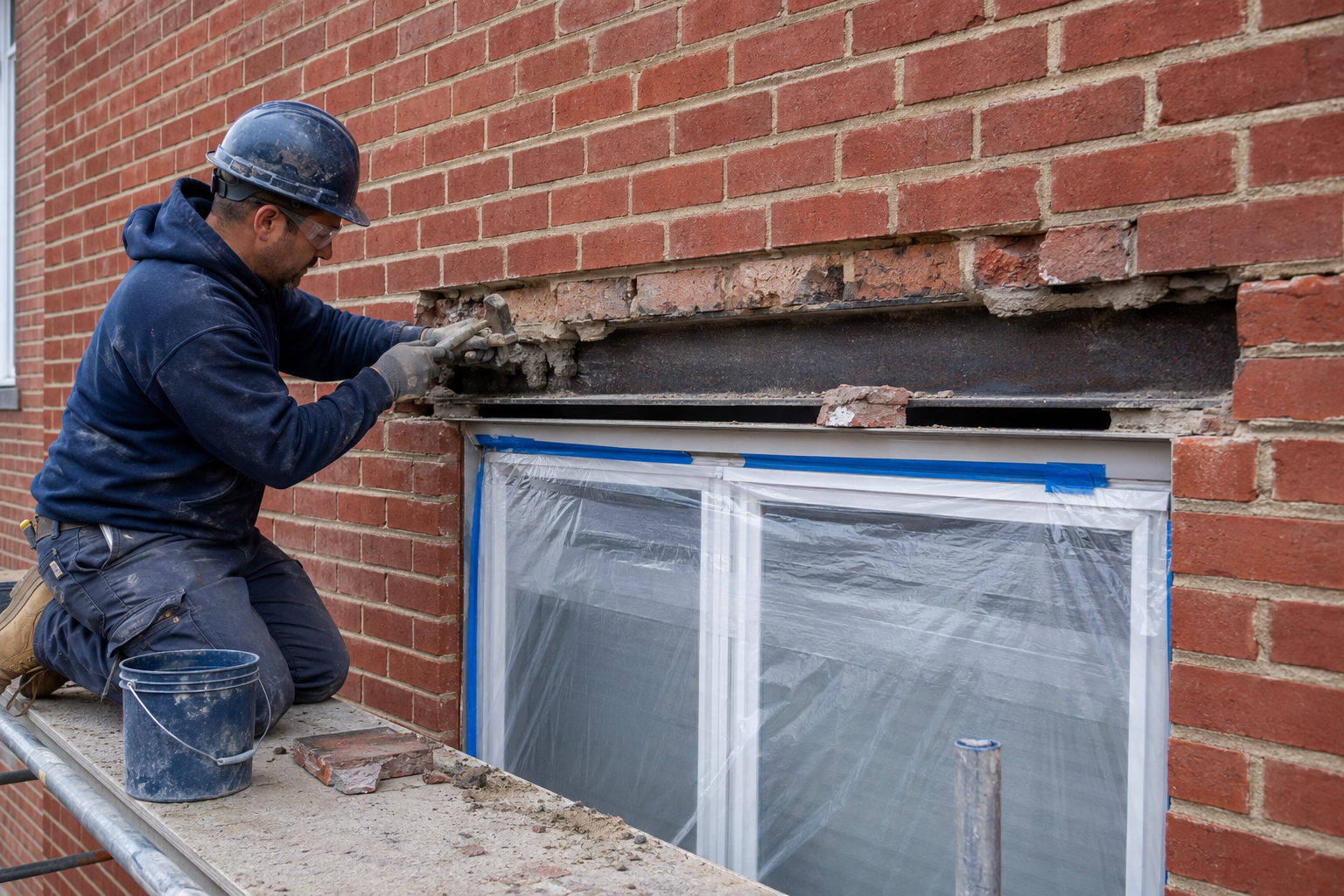
Lintel Repair

03.
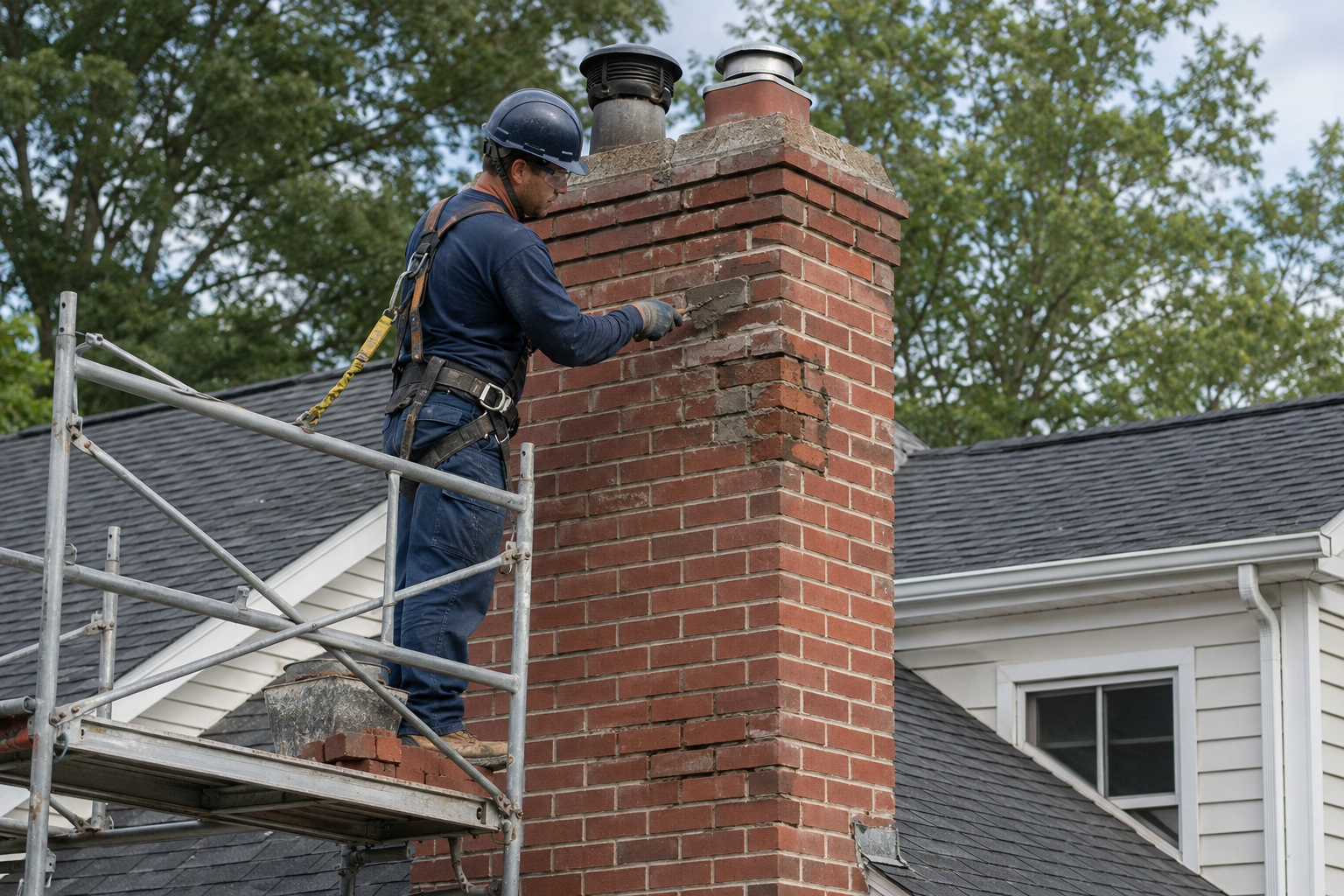
Brick Chimney Repair

04.
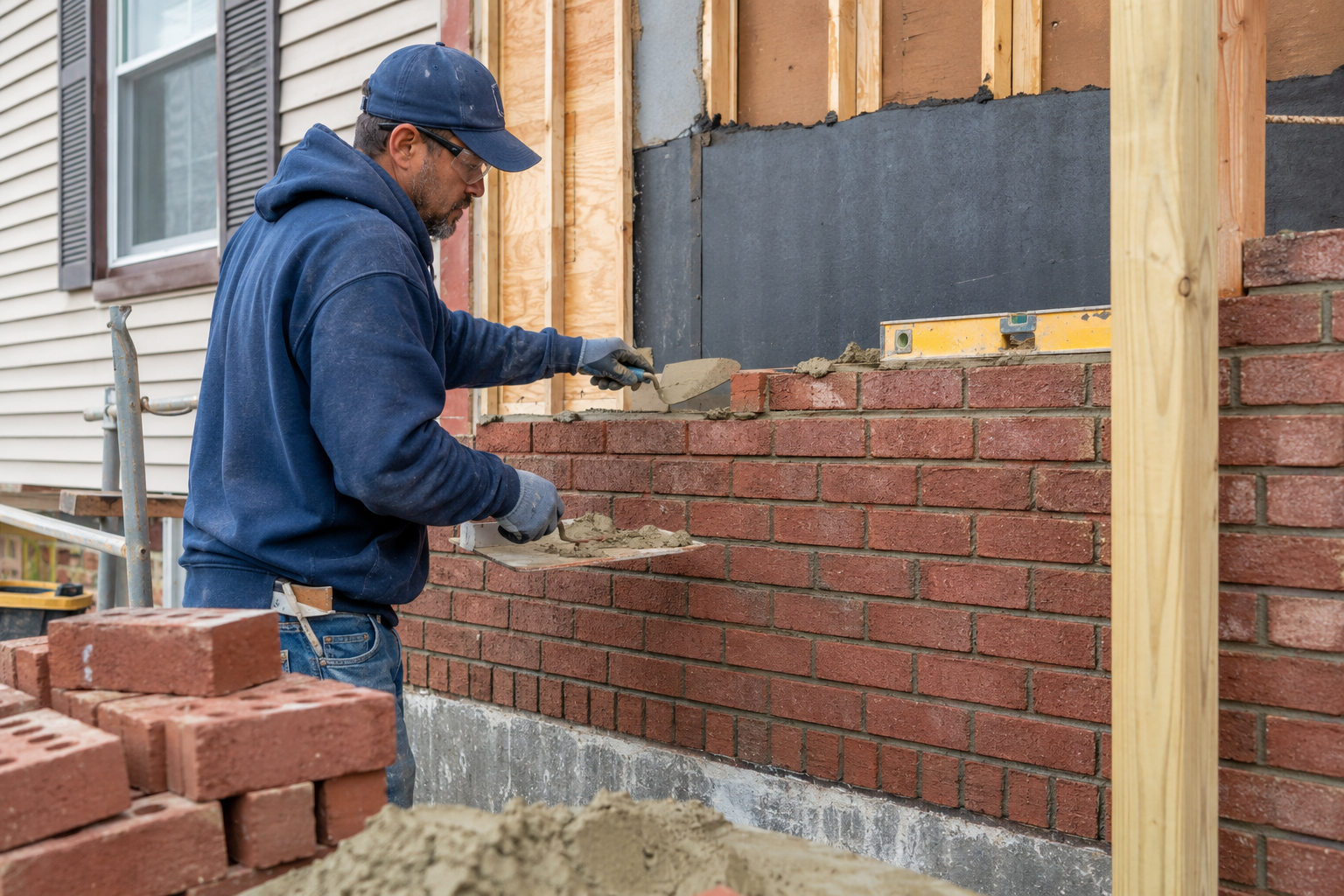
Masonry

05.
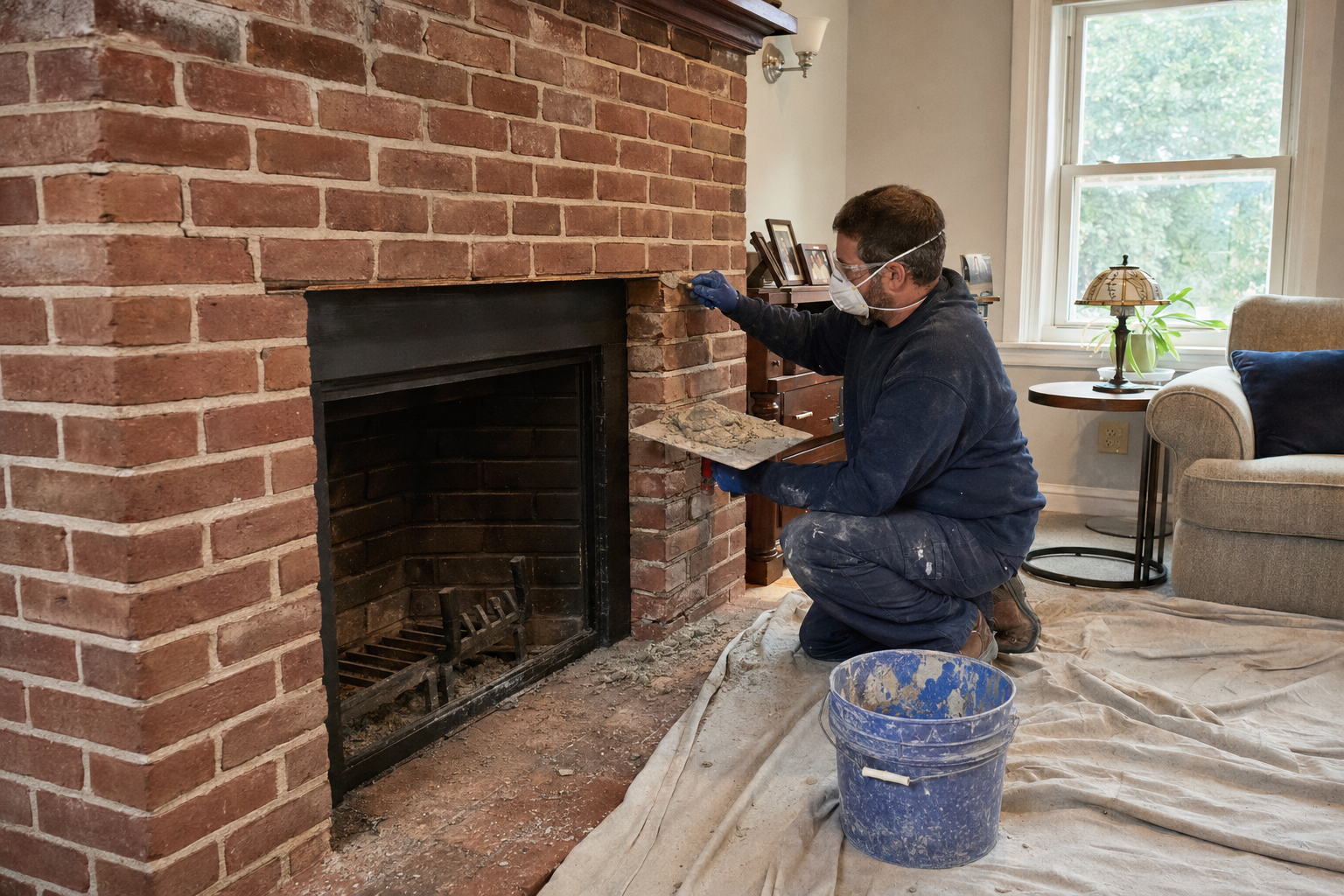
Brick Fireplaces

06.

Browse Through Our Portfolio of Quality Work

Showcasing Our Finest Masonry Projects
COMMON TUCKPOINTING MYTHS

Not Every Imperfect Mortar Joint Needs the Same Repair

Tuckpointing is often described as if the diagnosis begins and ends with one question: does the mortar look old? Real masonry is more complicated. A joint can be weathered but still sound. A narrow crack can be caused by movement rather than mortar decay. A smooth new surface can hide poorly bonded material only a fraction of an inch deep. Understanding those differences prevents tuckpointing from becoming a universal answer to every mark on a brick wall. The repair should respond to the condition inside the joint, not simply produce a more uniform facade.

Myth: Every Crack Needs New Mortar

A recurring crack may be recording movement at an opening, corner, or long wall section. Packing it with rigid mortar does not necessarily remove the force that opened it.

Myth: Harder Mortar Lasts Longer

Mortar strength must make sense beside the masonry it surrounds. An unnecessarily rigid mix can change how stress and moisture affect older or more vulnerable brick.

Myth: A Thin Surface Patch Is Repointing

Smearing fresh mortar across the face of a deteriorated joint can improve its appearance temporarily. Proper repointing requires enough depth for new mortar to be placed and compacted against sound material.

Myth: The Whole Wall Must Look Identical

Selective repair can leave variations between older and newer joints. Visual uniformity is not more important than preserving sound masonry and limiting unnecessary removal.

Good tuckpointing begins by rejecting the idea that every wall needs to be made visually perfect. Mortar is evaluated by depth, cohesion, adhesion, compatibility, and the conditions affecting the surrounding masonry. Sometimes the correct decision is to repoint. Sometimes a crack needs further investigation. And sometimes an aged joint is simply doing what an old masonry joint looks like after years of service. Knowing the difference is part of the craft.
AN ILLINOIS BUILDING MATERIAL

Brick Did More Than Survive Illinois Weather. It Helped Define the Architecture

Walk through older neighborhoods in Chicago and across many Illinois communities and brick appears in remarkably different forms. It creates plain side walls on two-flats, detailed storefront facades, window arches, parapets, schools, churches, industrial buildings, and modest residential homes. The same basic masonry unit became both construction material and architectural language. Part of brick’s long presence comes from durability, but architecture also benefited from its modular nature. Individual units can be arranged into bonds, projections, recessed panels, arches, and decorative courses without abandoning the basic wall material. Structural and practical requirements could become part of the facade instead of being visually separated from it. That history matters during restoration. A projecting course may be more than decoration. A masonry arch changes how load travels around an opening. A parapet has different exposure conditions from the protected wall below. Preserving brick architecture means understanding that facade details are pieces of a building system as well as elements of local character.

Openings Became Architectural Features

Brick can be arranged around windows and doors in arches, soldier courses, and other configurations that influence both appearance and masonry geometry.

One Material Creates Many Wall Textures

Bond patterns, projections, recesses, and changes in joint treatment allow brick facades to develop depth without relying entirely on applied decoration.

Brick Connects Different Building Types

Residential, commercial, civic, and industrial buildings throughout Illinois use masonry in distinct ways, yet the material creates visual continuity across older neighborhoods.

Original Details Carry Construction Information

Corbeling, parapets, sills, and masonry around openings should be examined as functional building details, not treated only as decorative brickwork.

The Best Time to Replace a Failing Lintel May Be Before the Opening Looks Severe

Building owners often expect structural repairs to follow a clear visual threshold: wait until the damage looks serious, then replace the failed component. Lintels do not always provide such a convenient deadline. Steel deterioration can advance within the wall while the exposed edge still appears manageable. At the same time, brick above the opening may begin to crack, shift, or lose alignment. Once displacement spreads through several courses, the scope is no longer limited to removing one piece of steel. More masonry may need to be dismantled, supported, and rebuilt. That is why the decision between continued observation, repair, and replacement is partly a question of timing. The purpose of an inspection is not to predict the exact day a lintel will fail. It is to determine whether the existing steel still offers a reasonable repair path or whether waiting is likely to transfer more of the problem into the surrounding masonry.

Remaining Steel Condition

Corrosion should be considered in terms of the member that remains, not only the rust visible along the exposed edge. Material loss can change the structural capacity of the lintel.

Extent of Masonry Disturbance

Cracks limited to the immediate opening represent a different repair condition from displaced brick extending several courses upward or toward neighboring windows.

The Cost of Waiting Is Not Always Linear

A lintel problem can remain localized for a period and then involve a much larger area of masonry. Repair scope may grow as surrounding materials respond to continuing movement.

Repair and Replacement Are Different Strategies

Surface treatment, steel maintenance, and full lintel replacement address different conditions. The appropriate choice depends on support, corrosion, deformation, and the masonry carried above the opening.

From Initial Consultation to Final Touches, We’re With You Every Step

Our Proven Process to Deliver Exceptional Masonry

Consultation & Planning

We discuss your vision, assess the site, and create a detailed plan tailored to your project.

Material Selection

We help you choose the best quality materials that suit your style and budget.

Expert Masonry Work

Our skilled team performs precise and durable masonry construction with attention to detail.

Final Inspection & Cleanup

We ensure the work meets high standards, then clean the site for your complete satisfaction.

Ready to Transform Your Space with Expert Masonry?

Contact Us Today for a Free Consultation and Quote!

PRESERVING ORIGINAL MASONRY

A Wall Can Survive a Century and Still Be Damaged by the Wrong Repair

Age alone is not the greatest threat to old masonry. Many historic walls have already demonstrated that their original materials can remain in service for decades. Problems often develop when later repairs introduce a material or detail that behaves differently from the wall around it. Preservation is therefore not about freezing a building in time. It is about allowing an old masonry system to continue working without forcing modern materials into places where their strength, density, or movement creates a new imbalance.

The Original Wall Establishes the Baseline

Brick hardness, mortar texture, joint shape, and evidence of previous weathering reveal how the masonry was assembled and how it has aged.

Later Repairs Change Local Behavior

A dense mortar patch, sealed joint, or incompatible replacement brick can create a small area that dries, expands, or transfers stress differently from the original wall.

Damage Appears Beside the Repair

When one material becomes significantly less accommodating, deterioration may shift into neighboring brick faces, joint edges, or adjacent courses rather than occurring within the repair itself.

Compatibility Restores Balance

Restoration aims to select materials and techniques that make sense for the existing masonry. The goal is not to reproduce age artificially, but to avoid making the repair the most aggressive part of the wall.

Original masonry does not survive because nobody touches it. It survives when intervention respects the way the wall was built. That may mean retaining brick with irregular color, accepting slight variations in joint appearance, or using mortar that is deliberately less rigid than a modern high-strength mix. In preservation work, restraint is a technical decision. The less unnecessary material removed and the fewer new incompatibilities introduced, the more of the building’s proven masonry system remains intact.
Trusted by Homeowners and Businesses Alike

Hear What Our Clients Say About Our Work

Sarah M.

I’m really impressed with the quality and craftsmanship. The team was professional and finished the job on time. My brickwork looks fantastic!

James T.

They transformed my backyard with beautiful stonework that’s built to last. Communication was great throughout the project. Highly recommend!

Linda K.

Excellent service from start to finish. The crew paid attention to every detail, and the final result exceeded my expectations. I’m very happy with their work.